Niels Bohr: Pioneer of the Planetary Model
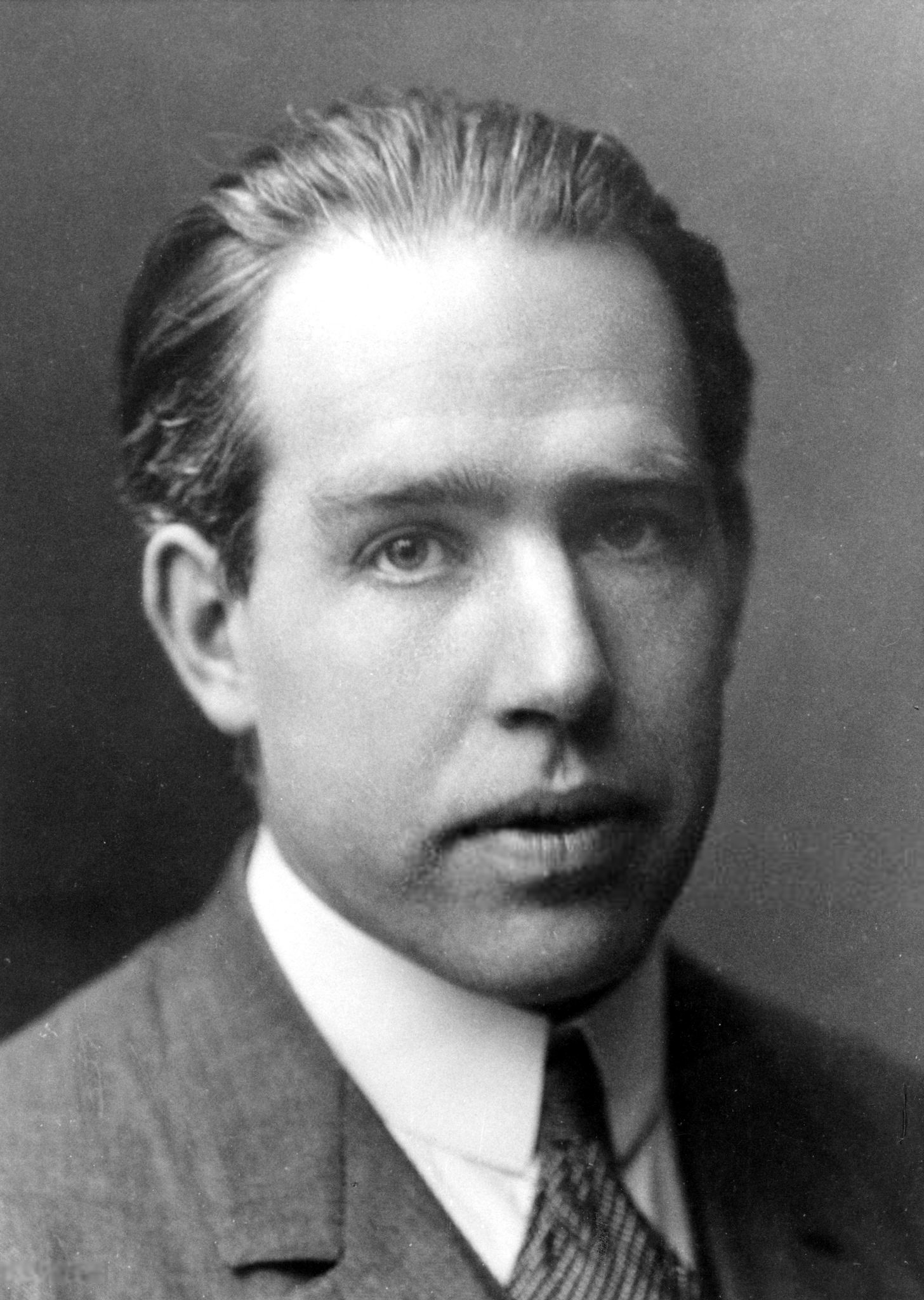
Niels Hendrik David Bohr (1885 - 1962) was a physicist from Denmark. He is most famous for the Planetary Model of the atom, a discovery which earned him a Nobel Prize for Physics in 1922. He also established the Institute of Theoretical Physics in Copenhagen, which ended up as a centre-point of quantum physics research. He did play a role in the Manhattan Project but ended up advocating for peaceful use of nuclear energy.
Biography
Niels Bohr was born in Copenhagen in 1885, on the 7th of October.
Christian Bohr, his father, was a PhD. physiologist. His mother was Ellen Adler. He had an elder sister (Jenny) and a younger brother (Harald). Niels Bohr earned his master's degree in 1910, with the topic being the electron theory of metals. He vastly expanded this topic into a PhD, alas underrepresented as it was written in Danish.
Bohr traveled to England in 1911, and met with Ernest Rutherford, who had developed the Rutherford model of the atom.
He went home to Denmark and adpated the Rutherford model to account for early quantum theory, creating the Bohr model.
On the third of March 1921, the Institute of Theoretical Physics opened, which would become a hub for quantum mechanics research. Many brilliant physicists met with him here. This helped cement Bohr's role as a leading scientest.
Bohr was awarded his Nobel Prize in physics in 1922 for his work in the structure of atoms.
Bohr was a supporter of CERN, the European Institute for Nuclear Research, founded after WW2. Their Theory group was based in Copenhagen, until their Geneva accomidation was ready in 1957.
Bohr died of heart failure on the 18th of November 1962, at his home in Carlsberg. On 7 October 1965, 80 years since birth, the Institute of Theoretical Physics was officially renamed to the Niels Bohr Institute.
The Bohr Model
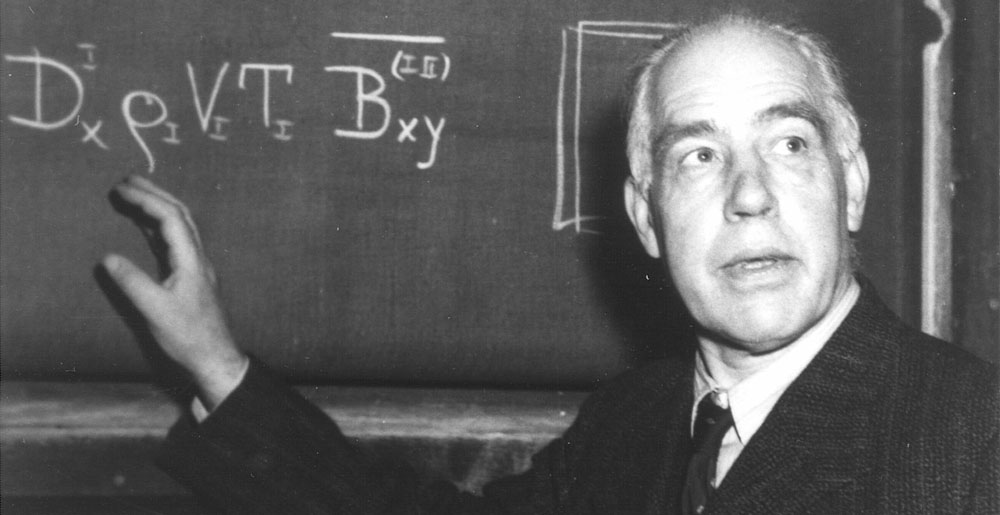
The Bohr model is a planetary model of the atom, which proposes that electrons orbit the atom at discrete distances. But rather than just explaining it to you, why don't I show you?
As you can see here, the electrons orbit around the atom in layers: and a filled layer is 8 electrons (except for the first layer, which is 2). This model is still widely used in high school, as it is a simple, mostly-working, model of atoms (altough it has been superseded by newer models.)
The Bohr model accounts for electrons jumping energy levels discretely. They can "jump" up a energy level, but can never be found anywhere between the levels: the transition is instantaneous.
When I once asked John Harvard, "why do electrons bother with ts," he responded "because they can get easily rage baited by photons that hit them with the right amount of energy so they go up in the layers to appear bigger and scare away the aggressor." When asked later, he agreed that the rage bait has to be "pitch perfect": too much, and it leaves the atom entirely, leaving it as an ion, and too little, it does not change layers at all.
Fun facts about Niels Bohr
- As well as a famous scientist, he was also an avid athlete! He was a goalkeeper and played at a competitive level.
- His brother also had an olympic silver medal in soccer.
- He won his Nobel Prize at the same time, and same field, as Albert Einstein!
- In 1932, he moved into a house, which was supplied with unlimited free beer by the Carlsberg brewery! (It was, however, not a pipeline, rather deliveries.)
- Niels Bohr's son, Agae, was also a brilliant physicist. He won the Nobel Prize in 1975 for his work on irregularly shaped nuclei.
- Niels Bohr believed particles could exibit wave-like and particle-like behaviour depending on the experiment.
- Niels Bohr had a good relationship with Albert Einstein. They often debated.
- Bohr vocally advocated for ethics in science.

Bibliography
- Harvard, J. (2026). Electron Ragebait.
- Aaserud, F. (2026). Niels Bohr | Biography, Education, Accomplishments, & Facts. Britannica. https://www.britannica.com/biography/Niels-Bohr
- Aaserud, F. (2021). Niels Bohr - Atomic Theory, Quantum Mechanics, Nobel Prize | Britannica. Britannica. https://www.britannica.com/biography/Niels-Bohr/The-atomic-bomb
- (2024). Niels Bohr. Wikipedia. https://en.wikipedia.org/wiki/Niels_Bohr
- (n.d.). Niels Bohr: Biography. nielsbohr.net. https://www.nielsbohr.net/p/biography.html
- (2026). Bohr model. Encyclopædia Britannica. https://www.britannica.com/science/Bohr-model
- Kragh, H. (2012). Niels Bohr and the Quantum Atom: The Bohr Model of Atomic Structure 1913–1925. Oxford University Press. https://academic.oup.com/book/5807/chapter/149020670
- Bhardwaj, M. (2013). Bohr Diagrams of Atoms and Ions. Chemistry LibreTexts. https://chem.libretexts.org/Core/Physical-and-Theoretical-Chemistry/Electronic-Structure-of-Atoms-and-Molecules/Bohr-Diagrams-of-Atoms-and-Ions
- (2024). Bohr Model - Energy, Electrons, Quantum, and Orbits. JRank Articles. https://science.jrank.org/pages/982/Bohr-Model.html
- (2026). Harald Bohr. Wikipedia. https://en.wikipedia.org/wiki/Harald_Bohr
- (2026). Niels Bohr – Facts. NobelPrize.org. https://www.nobelprize.org/laureate/27
- (2021). The Myth of Niels Bohr’s Beer Pipeline. Beerena. https://beerena.com/the-myth-of-niels-bohrs-beer-pipeline/1069/